Nothing stays the same, and that includes water and wastewater project specifications.
Recently, I was looking forward to breakfast at my favorite local restaurant, one I’d been visiting for years. When I pulled into the parking lot, I was greeted by a simple “Closed” sign. After 34 years in business, the restaurant had been sold, and a furniture store was moving in. It was a small reminder of an old saying: The only constant in life is change.
The water and wastewater industry is no exception. Materials evolve, regulations change, and technology continues to advance. Utility and engineering project specifications must keep pace with these changes or risk falling behind, affecting cost, safety, compliance, and long-term performance.
This #IronStrong Blog explores why keeping water and wastewater project specifications current and relevant is critical for utilities and civil engineers.

What Are Utility and Engineering Project Specifications?
Utility and engineering project specifications are mandatory written documents that define a project’s requirements, standards, materials, performance criteria and construction methods. They serve as a critical link between design intent and final execution, guiding designers, manufacturers, contractors and inspectors.
Specifications are the backbone of a successful project. When they are clear, detailed and up to date, projects tend to run more efficiently. Owners benefit from more competitive bids, fewer requests for clarification during construction, improved constructability and stronger long-term system performance.
Think of updated specifications as a proactive risk-management tool. They help ensure longevity, regulatory compliance and sustainable water management for the communities that utilities serve.
The Cost of Outdated Specifications
Outdated specifications often fail the “five C’s” of good specification writing:
- Clear
- Concise
- Complete
- Correct
- Consistent
When specs fall short, projects are more likely to experience confusion, cost overruns, delays, rework, and even potential legal exposure.
Common red flags include:
- References to obsolete materials, such as polybutylene, asbestos cement, or clay pipe
- Referencing outdated AWWA standards
- Joint types no longer used in the industry
- Manufacturers that no longer exist
While these issues may seem minor, they can lead to higher bid prices, field misinterpretations, and unnecessary construction challenges.
Why Keeping Specifications Current Matters
1. Regulatory Compliance
Water and wastewater projects operate under strict health, safety, and environmental regulations designed to protect public health and ensure safe, reliable service. Outdated specifications may fail to meet current legal requirements, leading to fines, project delays or legal challenges.
In April 2024, for example, the U.S. Environmental Protection Agency finalized the first enforceable national drinking water standards for six Per- and Polyfluoroalkyl Substances (PFAS) compounds, including PFOA and PFOS. Looking ahead, additional contaminants, such as microplastics, may be included in future monitoring and regulatory frameworks. Updated specifications help ensure treatment technologies and materials remain aligned with evolving maximum contaminant levels and compliance requirements.1
2. Technology Advancements
The water sector continues to advance in materials, treatment processes, and monitoring systems. New technologies improve the detection of bacteria, pathogens, pharmaceuticals, and emerging contaminants while enhancing utility system resilience and operational efficiency. Current specifications allow utilities to take advantage of these innovations rather than relying on outdated approaches that may no longer reflect current industry best practices.
3. Performance and Sustainability
Modern specifications support life-cycle cost analysis, enabling utilities to select materials that deliver the best long-term value. Designing systems with extended service lives — often 100 years or more — reduces replacement frequency, lowers environmental impact and supports sustainable infrastructure planning. By considering performance over the entire life of an asset, utilities can make more informed investment decisions.2
4. Risk Management
Relying on outdated specifications increases the risk of system failure, contamination and infrastructure damage. Current specifications ensure projects are built to modern engineering standards, reducing exposure to safety, operational and reputational risks.
5. Operational Efficiency and Cost Control
Accurate, up-to-date specifications improve operational efficiency by enabling optimized treatment processes, reducing chemical use, accelerating leak detection, and lowering pumping and treatment energy costs. They also improve construction planning and execution, minimizing errors, reducing rework, and streamlining operation and maintenance over the life of the system, ultimately lowering total ownership costs.3
6. Procurement and Bidding Clarity
Current specifications provide contractors with a clear and consistent basis for bidding, promoting fair competition and more accurate pricing. Clear requirements also help reduce misunderstandings during procurement and construction.
This clarity is especially important for federally funded projects. Under the Build America, Buy America Act, qualifying domestic products must be used. Specifications that fail to reflect current domestic manufacturers can result in contractors unintentionally bidding noncompliant materials, putting project funding and all parties involved at risk. This example highlights the project funding component only and does not address the quality issues/concerns that could develop when a utility uses nondomestic materials.4 & 5
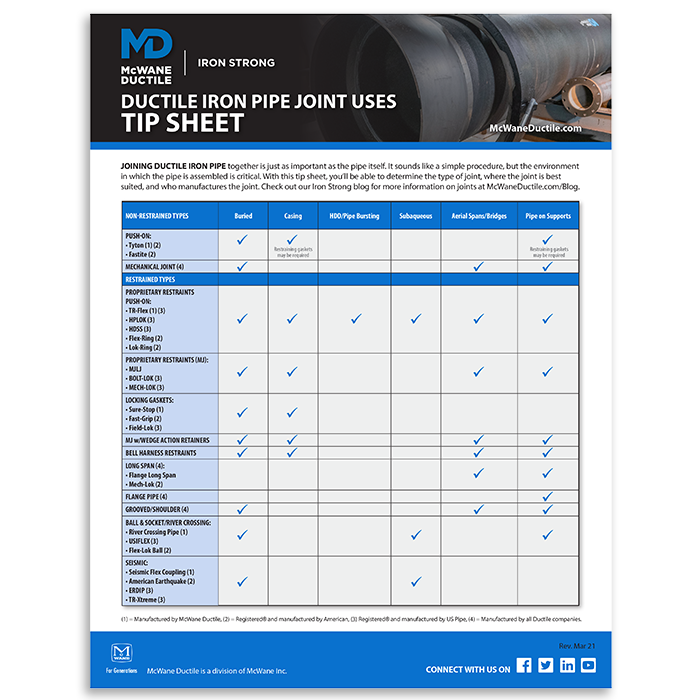
Is it the right Ductile iron pipe joint for the job? Be sure with this free and handy tip sheet listing various DI Pipe joints and their uses from McWane Ductile!
Staying Ahead of Change
Regularly reviewing and updating project specifications will help utilities and consulting engineers protect project integrity and ensure infrastructure is built safely, efficiently, and to modern standards. It also helps position utilities to take advantage of new technologies, evolving regulations, and industry best practices.
At McWane Ductile, our sales operations team can review project specifications for Ductile iron pipe to ensure they are accurate and current. Many team members bring decades of experience in utility operations, consulting engineering, and field construction. From design and submittals to installation, we are committed to supporting water and wastewater professionals throughout the industry.
Change is inevitable. Ensuring your specifications evolve with it can help utilities improve performance, maintain compliance, and support reliable infrastructure for generations to come.
Recommended Reading
For additional insight, I recommend the following #IronStrong blog articles by my colleagues, available at McWaneDuctile.com/blog:
- Safe Drinking Water – How Do We Ensure the Highest Standards? by Jerry Regula
- Why Should I Use Ductile Iron Pipe? Four Key Considerations by Roy Mundy
- How Can Using Ductile Iron Pipe Save Money on a Water Utility’s Energy Bill? by Cole Mitcham
- Build America, Buy America Act (BABA): What Is It, What Has Changed & Where Do We Go From Here? by Ashley Wright and Dustin Henderson
- Why Consider a Domestic-Only Ductile Iron Pipe Specification? by Roy Mundy